Launch offer — valid today only

📄 Digital book in PDF · read it on your phone or print it

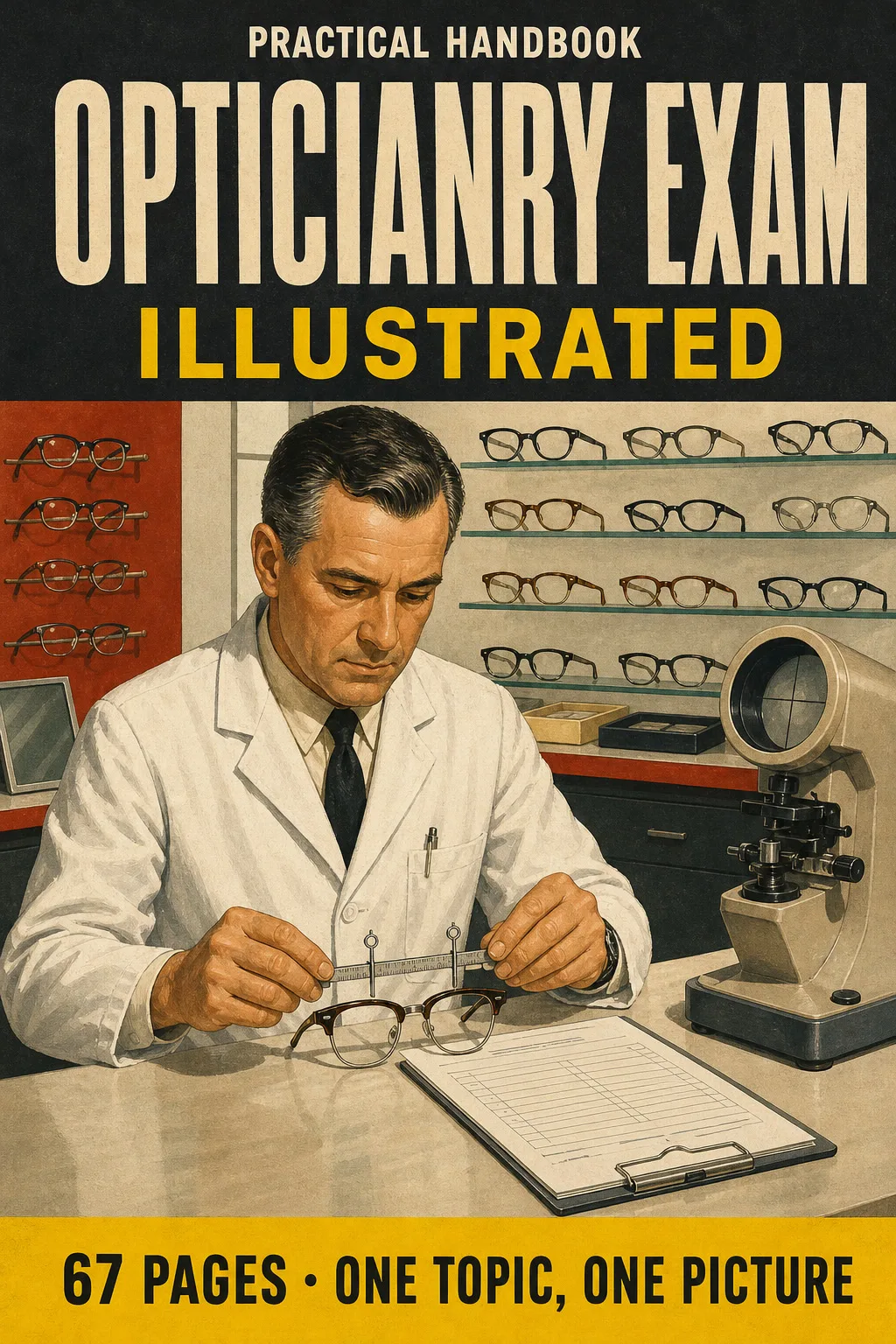
The Opticianry Exam in Drawings: Every Rx, Lens and Measurement in the Same Order One Drawn Topic on Every Page

For the national opticianry exam: read, transpose and measure any Rx in the same order every time. 67 pages, each topic drawn first, with the numbers you need right beside it. PDF by email, printable for the counter. 67 illustrated pages.

START STUDYING THIS WAY

🔒 Secure checkout · PDF by email · 30-day guarantee

Every topic, its own pageEvery rule and measurement drawn, with the explanation right beside it
67 illustrated pages9 parts, from the exam map to test day
Up-to-date sourcesCurrent exam candidate handbook, ANSI Z80.1-2025 and the FDA impact-resistance rule
PDF by emailFormat

Look Inside the Book

Every page has one big drawing and a box with the numbers and steps you need to know:

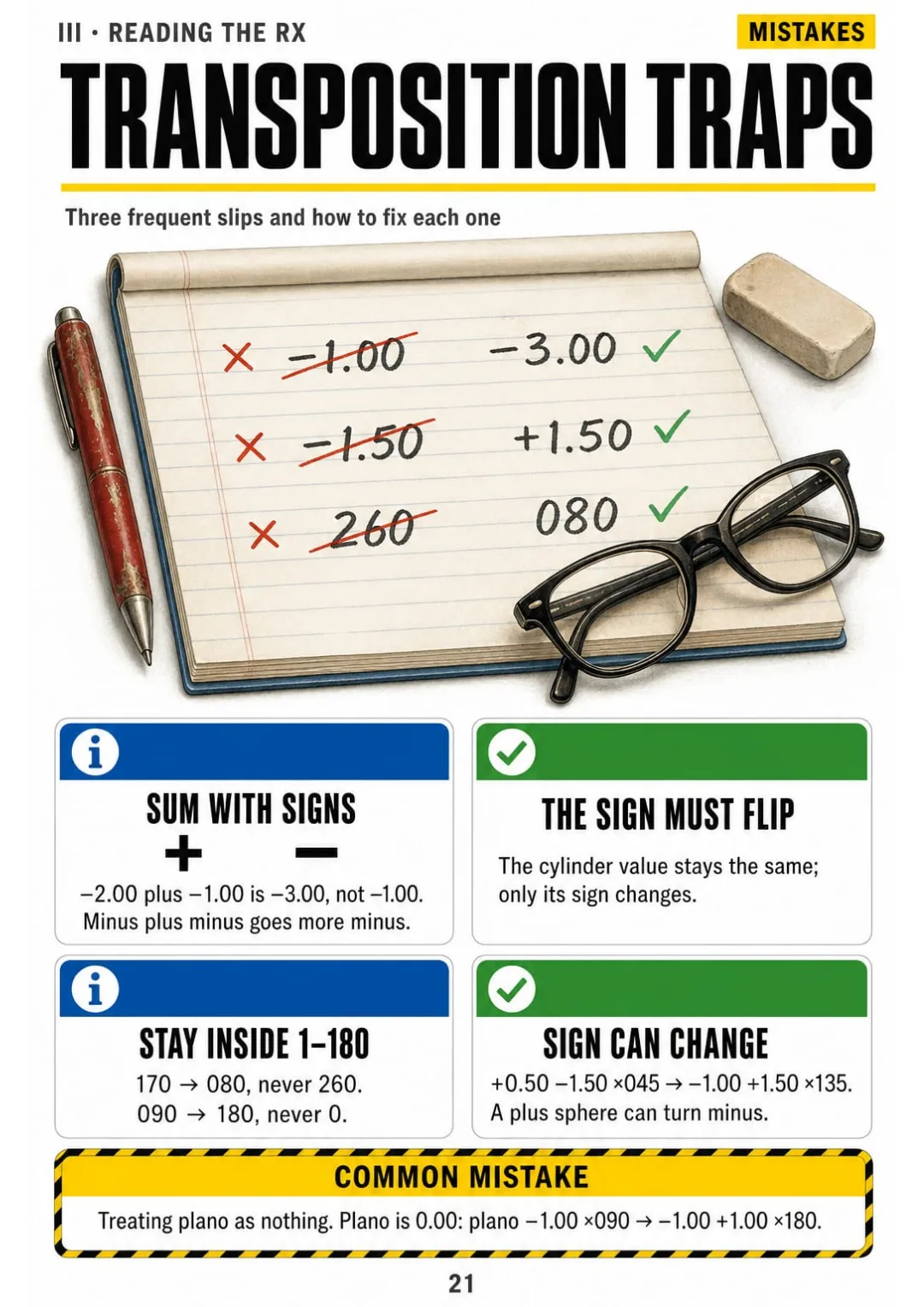
Sum with signs, flip the cylinder, keep the axis inside 1–180
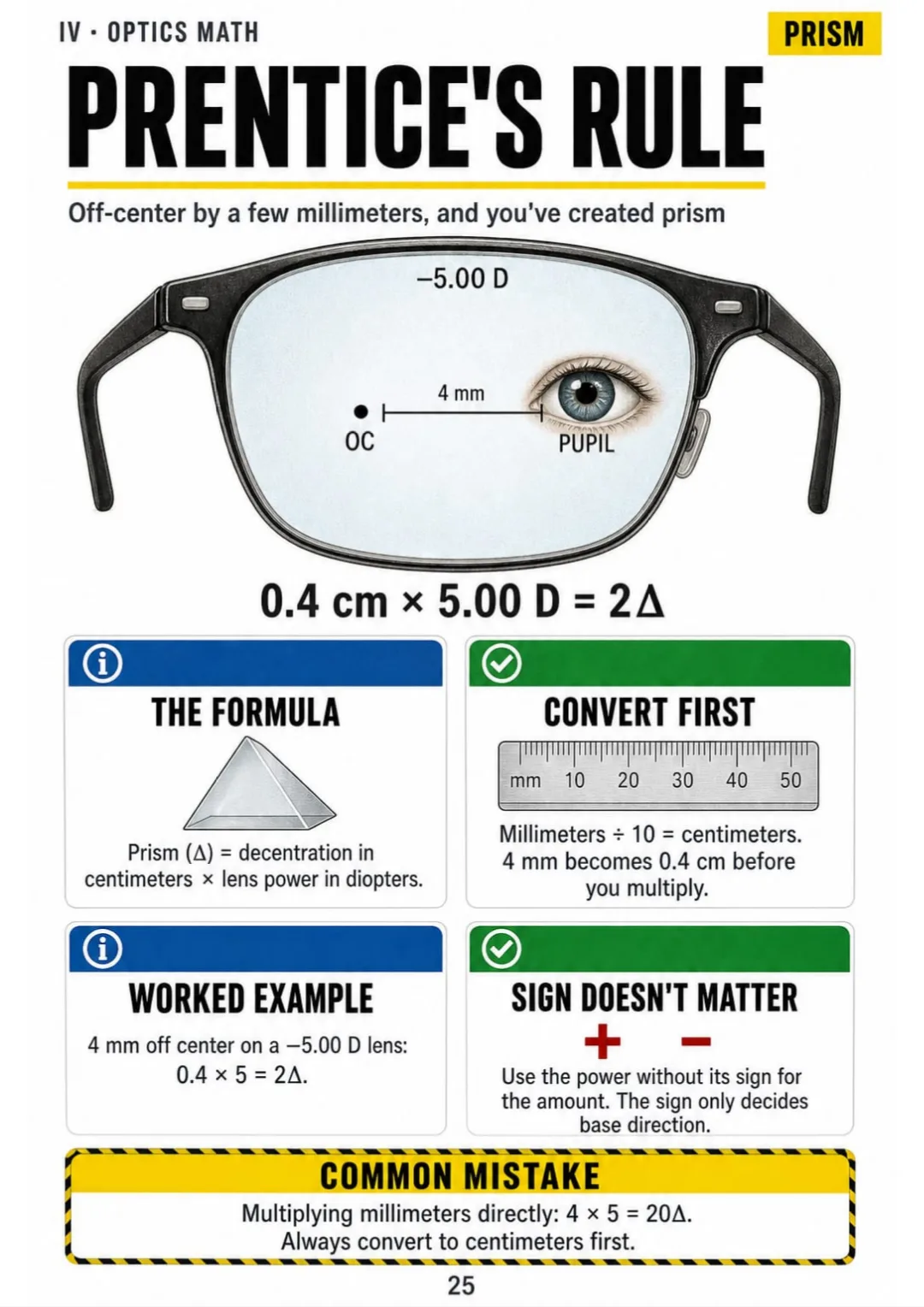
4 mm off center on a −5.00 D lens = 0.4 × 5 = 2Δ
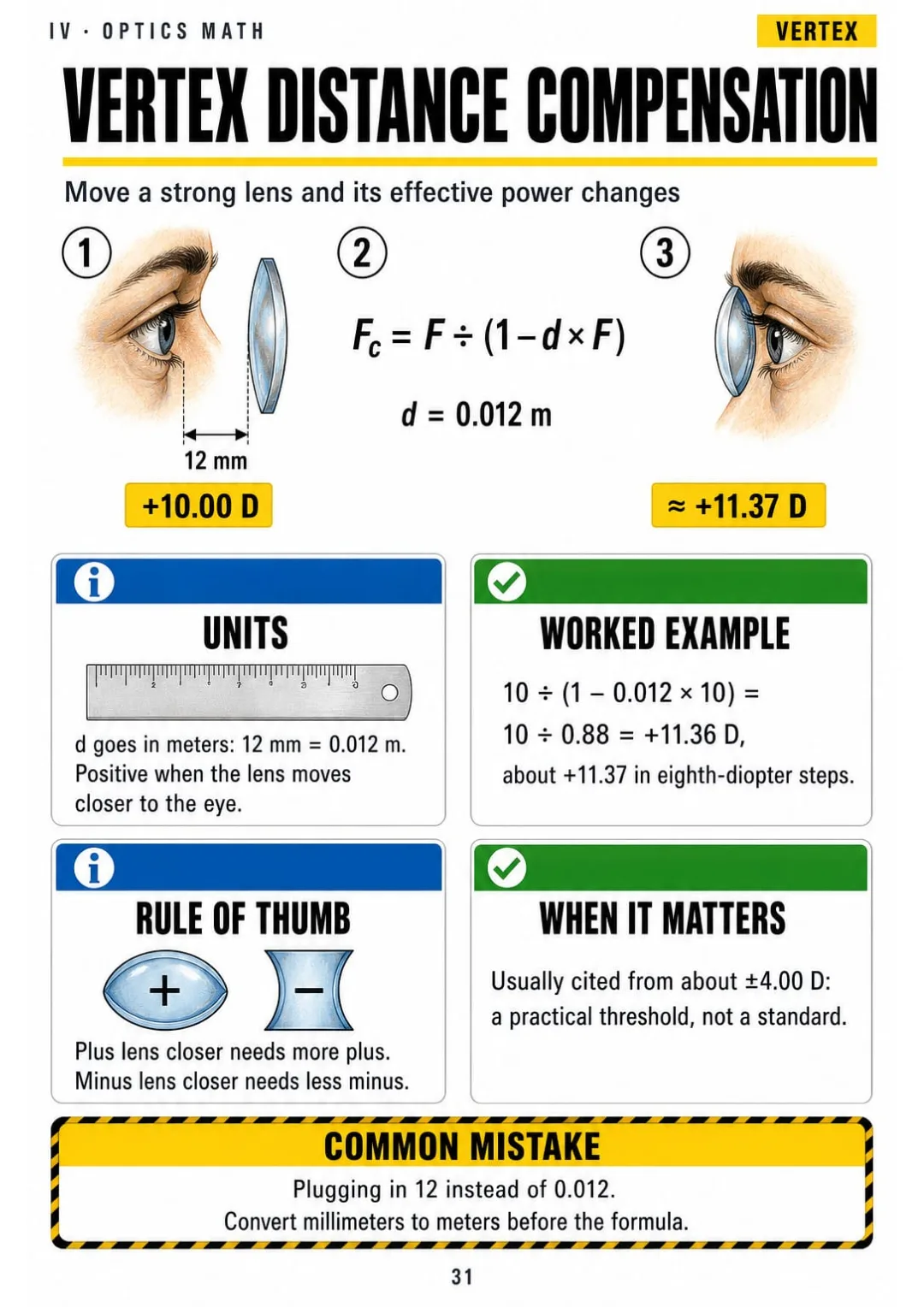
+10.00 D at 12 mm moved to the eye ≈ +11.37 D
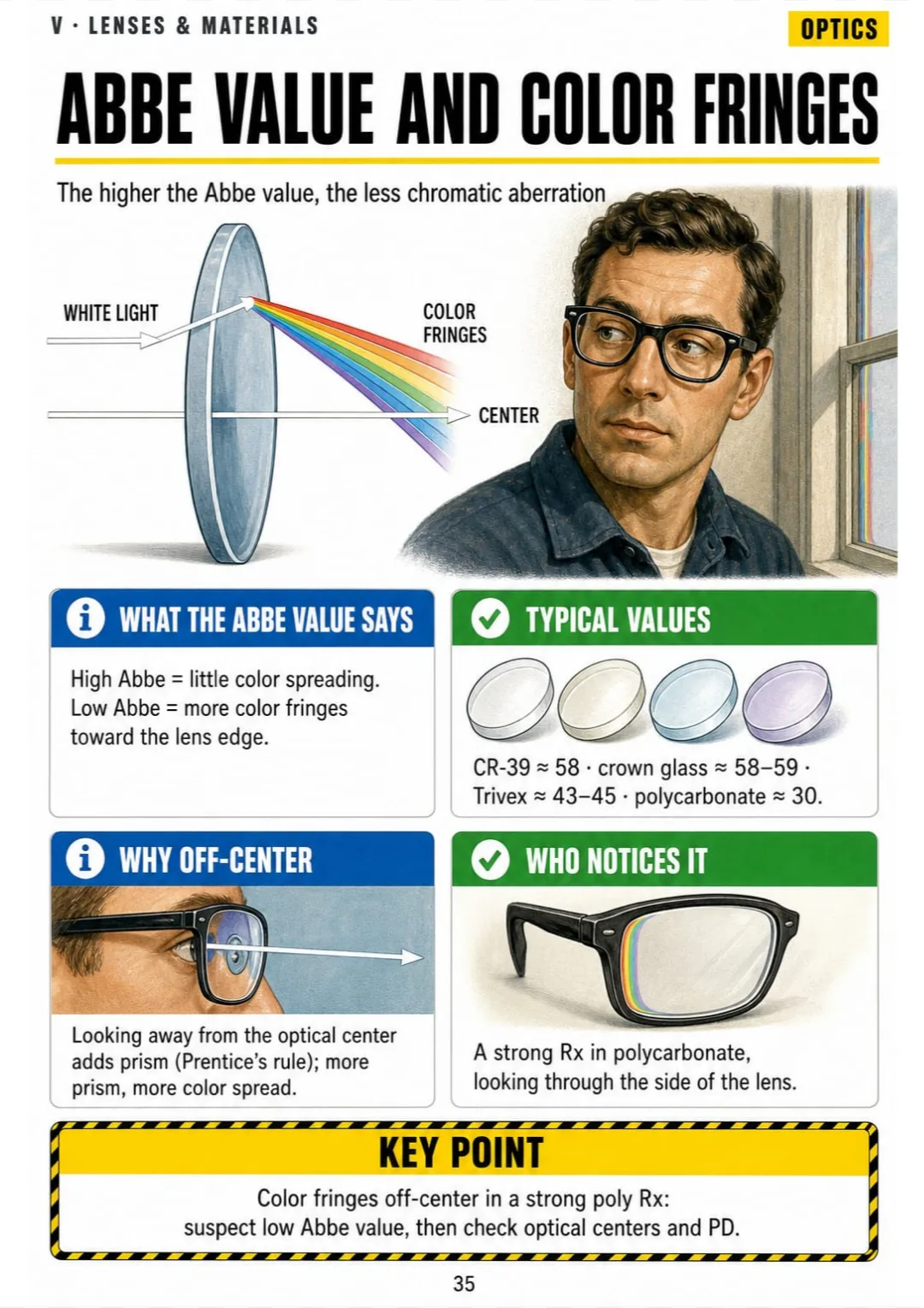
Abbe value: CR-39 ≈ 58, Trivex ≈ 43–45, polycarbonate ≈ 30 — higher means fewer color fringes
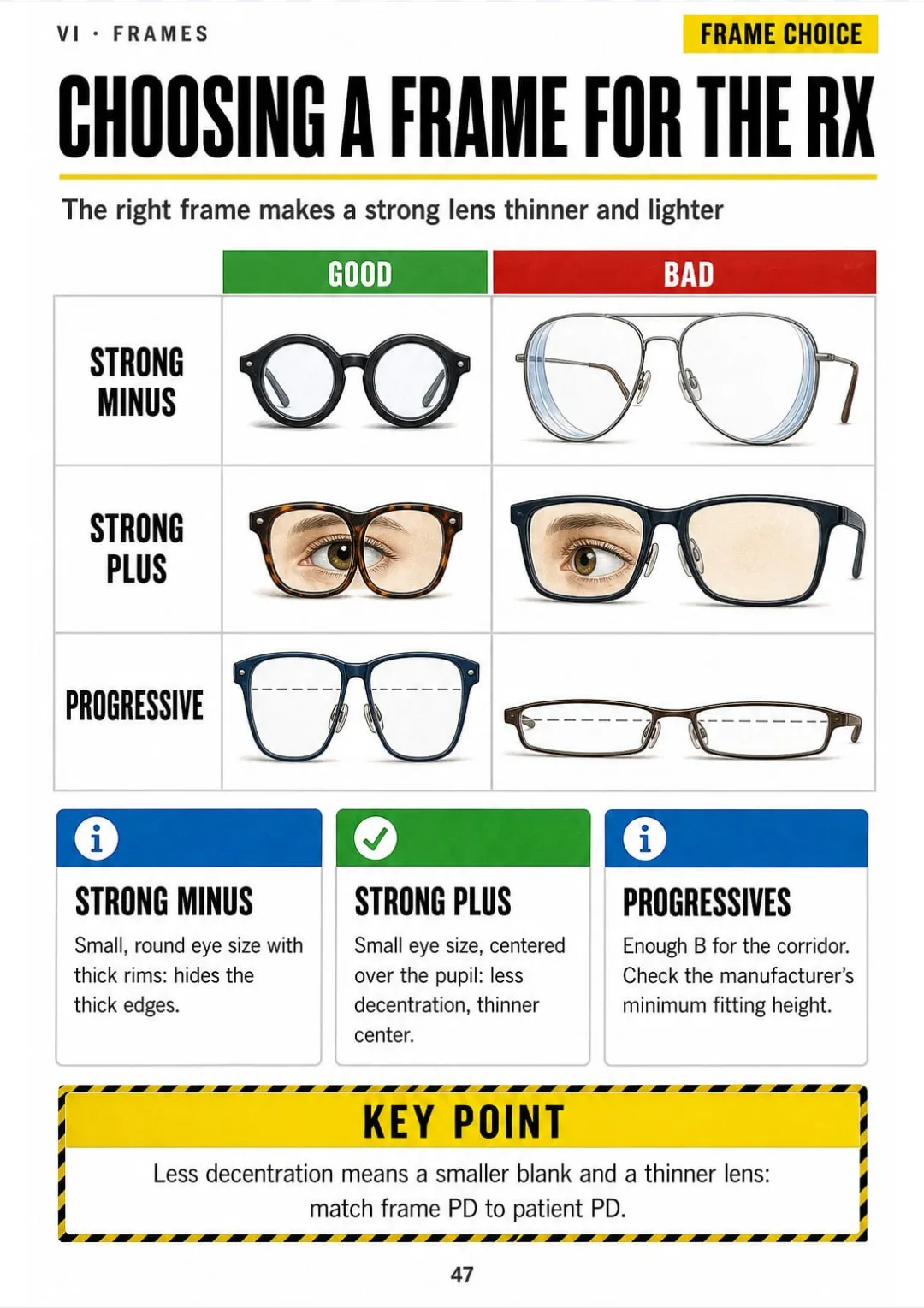
Strong minus: small round thick rims. Strong plus: small and centered. Progressives: enough B.
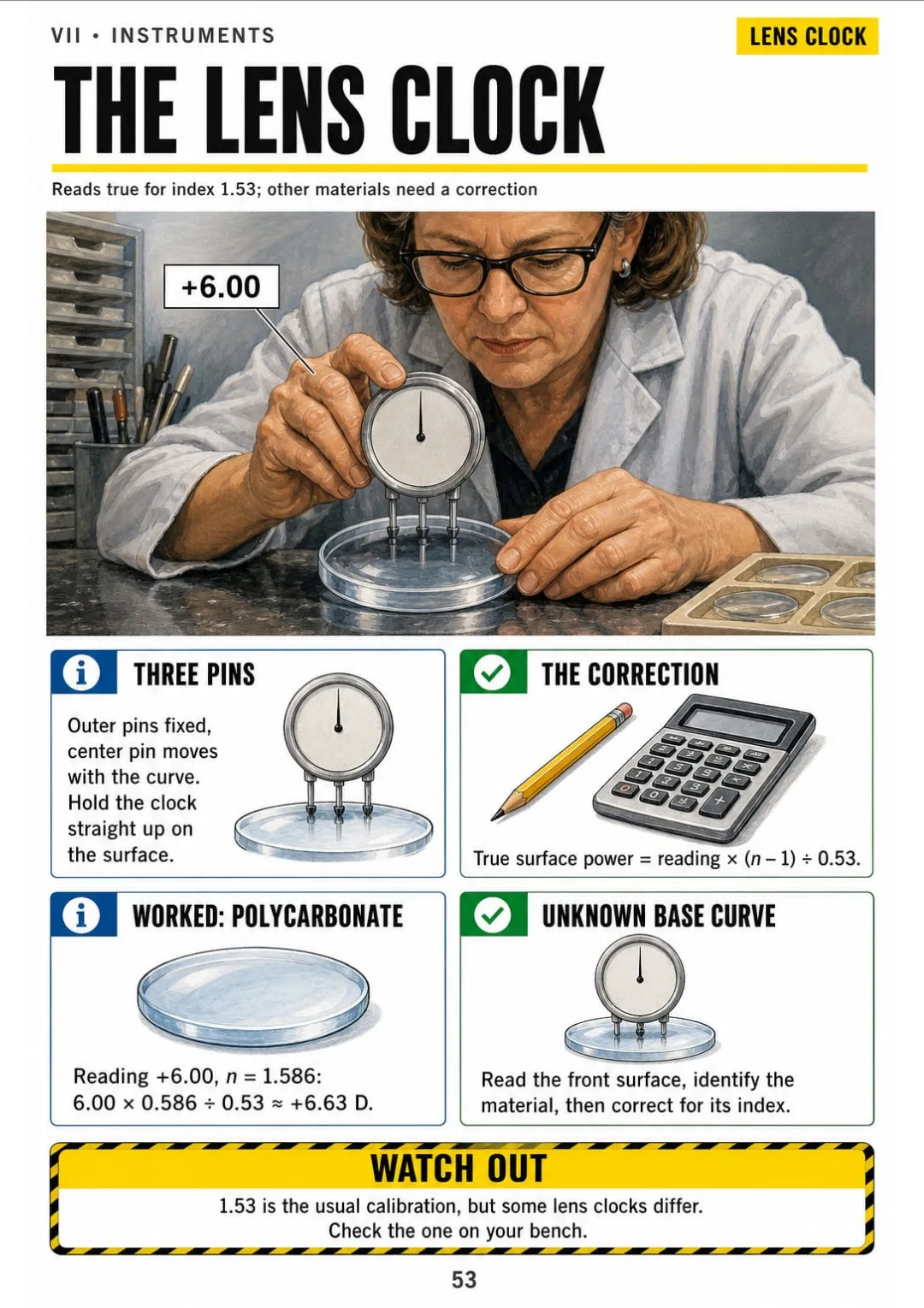
Lens clock reads for 1.53: +6.00 on polycarbonate is about +6.63 D true surface power.
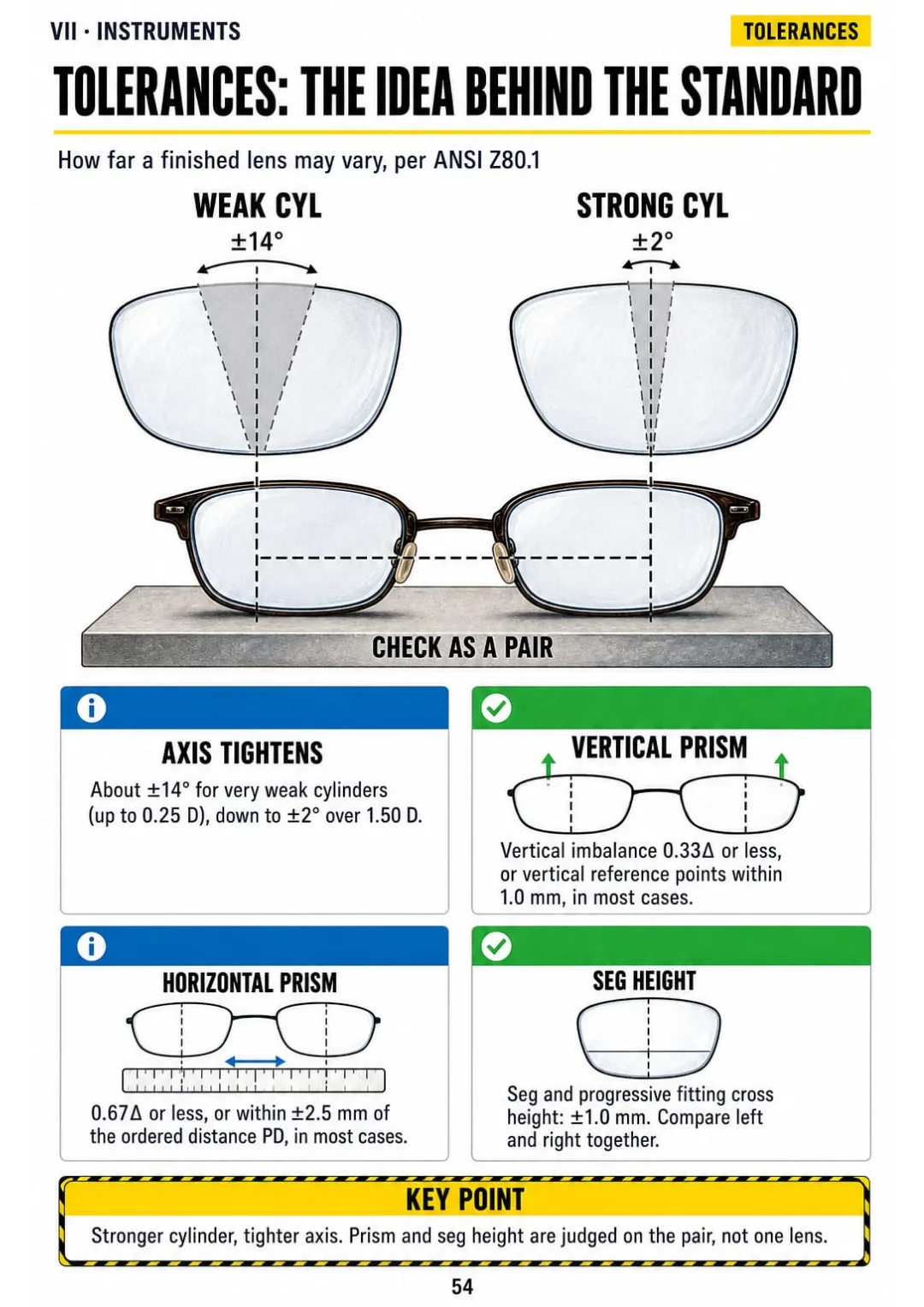
Axis tolerance goes from about ±14° on weak cylinders to ±2° over 1.50 D (ANSI Z80.1-2025).
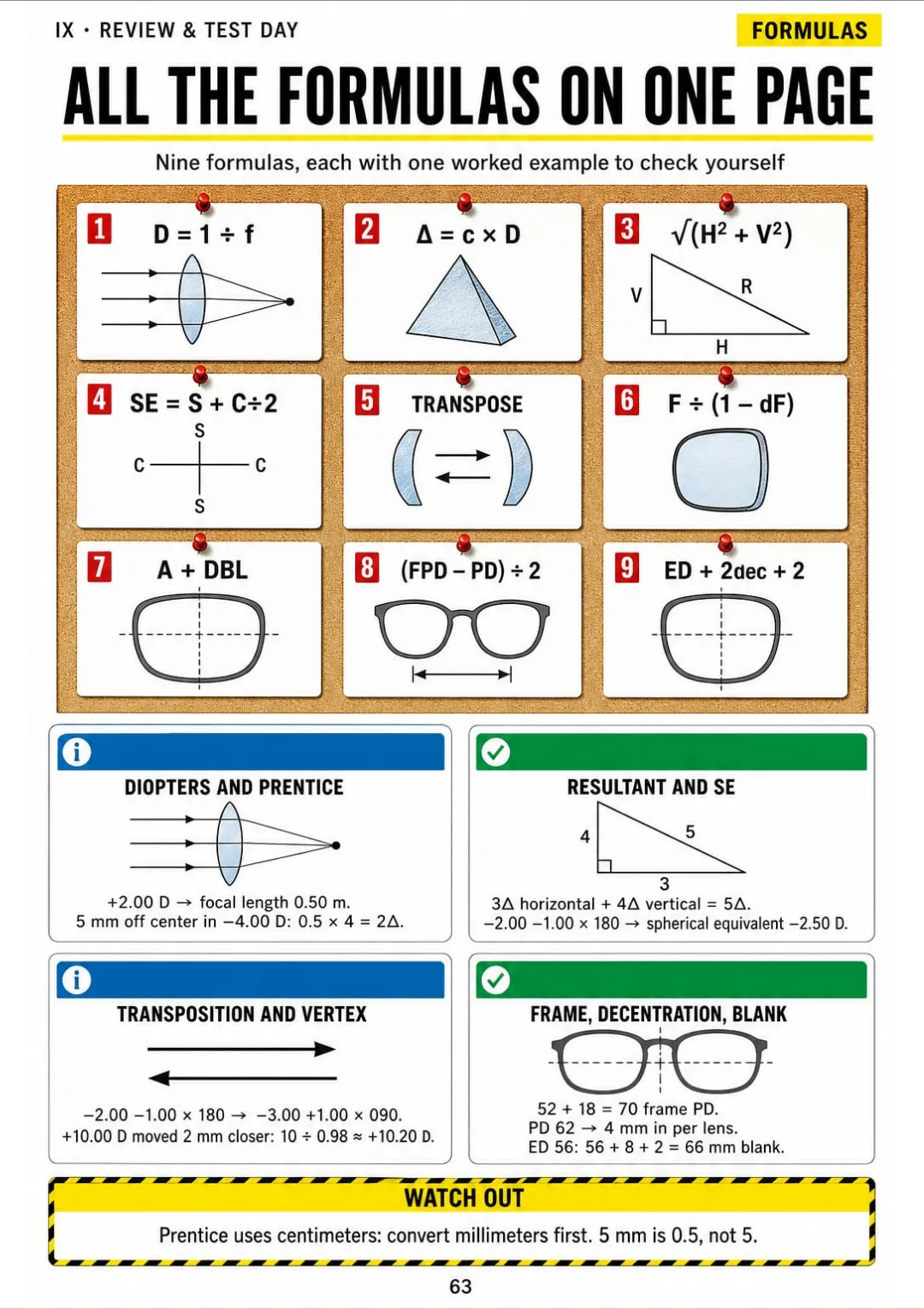
9 formulas, 9 worked examples: from 1 ÷ f to ED + 2 × decentration + 2 mm

Swipe to see more →

These are real pages from the book. The table of contents is the full one: 9 parts and 63 topics.

The Problem Isn't You. It's How It Was Explained to You.

You're looking at a +10.00 D Rx written at 12 mm, and the practice question asks for the power at the eye. You know it isn't +10.00. You just don't know which way it moves, or by how much.

The manual covers it in two paragraphs: effective power, focal length in meters, a fraction inside a fraction. Nothing shows you what is actually moving.

+10.00 D at 12 mm moved to the eye ≈ +11.37 D

In this book, vertex distance compensation is one page. The lens is drawn at 12 mm, then moved to the eye, and the focal point stays put. Plus gets stronger, minus gets weaker, and the worked example lands at about +11.37 D. You see why before you calculate.

Prentice's rule, transposition, the boxing system, lensometer readings and the progressive lens map work the same way: each one has its own page, drawing first.

So the next time vertex distance comes up, at the counter or on the exam, you work it out without going back to the manual.

COMPARE FOR YOURSELF

The Same Topic, Two Ways to Study It

THIS
  • The manual: line after line
  • Prentice's rule explained only in words
  • You walk into the exam still unsure
Prentice's rule states that the prismatic effect induced at any point on a lens is equal to the product of the distance of that point from the optical center, expressed in centimeters, and the dioptric power of the lens in the meridian under consideration. Consequently, any decentration of the optical center relative to the visual axis, whether intentional or the result of a fitting error, produces a prismatic effect whose base direction depends on both the sign of the lens power and the direction of displacement in each meridian.
FOR THIS
  • Prentice's rule in one drawing
  • The numbers in one box
  • You see it and you get it
4 mm off center on a −5.00 D lens = 0.4 × 5 = 2Δ
CONTENTS

Take a Look at the 9 Parts and 63 Topics

The exam map, eye and light basics, reading the prescription, optics math, lenses and coatings, frames and measurements, instruments, dispensing and the law, and review for test day: 67 pages, all illustrated.

IThe Exam Map · pp. 5-8
  1. The Exam at a Glance
  2. Five Domains, One Map
  3. Licensing State by State
  4. How to Study This Book While You Work
IIEye and Light Basics · pp. 9-15
  1. The Eye an Optician Needs to Know
  2. Myopia, Hyperopia, Astigmatism, Presbyopia
  3. Light and Index of Refraction
  4. Diopters and Focal Length
  5. What a Prism Diopter Is
  6. Every Lens Is Two Prisms
  7. The Light Spectrum for Opticians
IIIReading the Prescription · pp. 16-24
  1. Anatomy of a Spectacle Rx
  2. The Same Order Every Time
  3. Axis Rules
  4. The Power Cross
  5. Transposition in 3 Steps
  6. Transposition Traps
  7. Spherical Equivalent
  8. Add Power and Near Rx
  9. Prism in the Rx
IVOptics Math with Worked Examples · pp. 25-33
  1. Prentice's Rule
  2. Base Direction from Decentration
  3. Prentice with Cylinder
  4. Resultant Prism
  5. Vertical Imbalance at Reading Level
  6. Slab-Off
  7. Vertex Distance Compensation
  8. Surface Powers and Base Curve
  9. Sag, Thickness and Minimum Blank Size
VLenses, Materials and Coatings · pp. 34-40
  1. Lens Materials Side by Side
  2. Abbe Value and Chromatic Aberration
  3. Other Aberrations and Magnification
  4. Bifocals and Trifocals
  5. Progressive Lenses: The Map
  6. Anti-Reflective and Other Coatings
  7. Tints, Photochromics and Polarized
VIFrames and Measurements · pp. 41-48
  1. The Boxing System
  2. Frame PD and Decentration
  3. Measuring Distance PD
  4. Near PD
  5. Seg Height and Fitting Height
  6. Frame Materials
  7. Choosing a Frame for the Rx
  8. Temple Length and Bridge Fit
VIIInstruments · pp. 49-54
  1. Lensometer Setup
  2. Reading Sphere, Cylinder and Axis
  3. Spotting, Marking and Measuring Prism
  4. Verifying Bifocals and Progressives
  5. The Lens Clock
  6. Tolerances: The Idea Behind the Standard
VIIIDispensing, Adjusting and the Law · pp. 55-62
  1. Standard Alignment
  2. Pantoscopic Tilt and Optical Center Height
  3. Fitting Adjustments on the Face
  4. Troubleshooting Complaints
  5. Impact Resistance and the Drop Ball Test
  6. The Eyeglass Prescription Release Rule
  7. Contact Lens Rx and Scope of Practice
  8. Privacy and Records at the Counter
IXReview and Test Day · pp. 63-67
  1. All the Formulas on One Page
  2. The Most Frequent Mistakes
  3. One Rx, Start to Finish
  4. The Last Two Weeks
  5. Test Day Checklist

One Page, One Topic, All Clear

Think of it this way:

The doctor hands you a finished pair and asks you to check it on the lensometer. Two sets of lines, a power wheel to turn, and you need sphere, cylinder and axis in the right order.

In the book you open the page on reading sphere, cylinder and axis, and it's drawn: first focus is the sphere, second minus first is the cylinder, the axis sits at the first meridian. −2.00 −1.00 × 180, worked out step by step.

Strong minus: small round thick rims. Strong plus: small and centered. Progressives: enough B.

Same with transposition, Prentice's rule, vertex distance, the boxing system and the progressive lens map: each one on its own page.

Opticianry Exam Illustrated is 9 parts and 63 topics, all drawn, and it ends with every formula on one page, the most frequent mistakes and one Rx worked from start to finish.

What you see drawn, you don't have to memorize.

What's Inside Opticianry Exam Illustrated:

Ipp. 5-8

The Exam Map

What the exam looks like, the five domains on one map, licensing state by state and how to study while you work.

IIpp. 9-15

Eye and Light Basics

The parts of the eye an optician needs, the four refractive errors, index of refraction, diopters and focal length, the prism diopter and the light spectrum.

IIIpp. 16-24

Reading the Prescription

Anatomy of a spectacle Rx, the reading order, axis rules, the power cross, transposition in 3 steps and its traps, spherical equivalent, add power and prism.

IVpp. 25-33

Optics Math with Worked Examples

Prentice's rule, base direction, Prentice with cylinder, resultant prism, vertical imbalance, slab-off, vertex distance, base curve, sag and minimum blank size, each with a worked example.

Vpp. 34-40

Lenses, Materials and Coatings

Lens materials side by side, Abbe value, aberrations, bifocals and trifocals, the progressive lens map, coatings, tints, photochromics and polarized lenses.

VIpp. 41-48

Frames and Measurements

The boxing system, frame PD and decentration, distance and near PD, seg and fitting height, frame materials, choosing a frame for the Rx, temple length and bridge fit.

VIIpp. 49-54

Instruments

Lensometer setup, reading sphere, cylinder and axis, spotting and measuring prism, verifying bifocals and progressives, the lens clock and the idea behind tolerances.

VIIIpp. 55-62

Dispensing, Adjusting and the Law

Standard alignment, pantoscopic tilt, adjustments on the face, troubleshooting complaints, impact resistance, the prescription release rule, contact lens Rx, scope of practice and privacy.

IXpp. 63-67

Review and Test Day

Every formula on one page, the most frequent mistakes, one Rx from start to finish, the last two weeks and a test day checklist.

At the end of the book: All the formulas on one page, the most frequent mistakes and one Rx worked from start to finish.
Plus: 2 Free Books

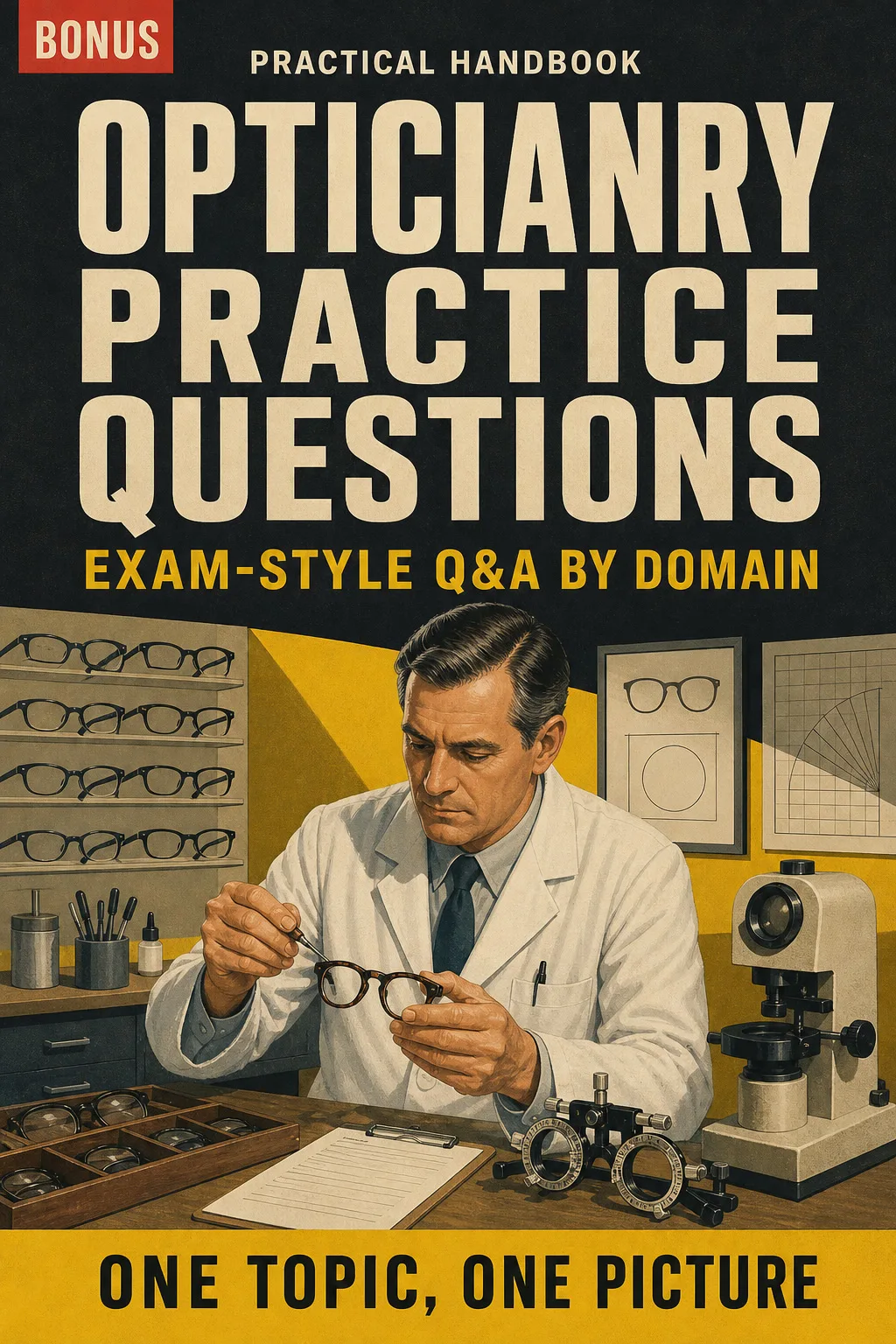
Opticianry Practice Questions: Exam-Style Q&A by Domain

BONUS 1: «Opticianry Practice Questions: Exam-Style Q&A by Domain»

Value on its own: US$ 17.90

Practice with exam-style multiple-choice questions grouped by domain, each with the answer and a one-line why, so you know where you stand before test day.

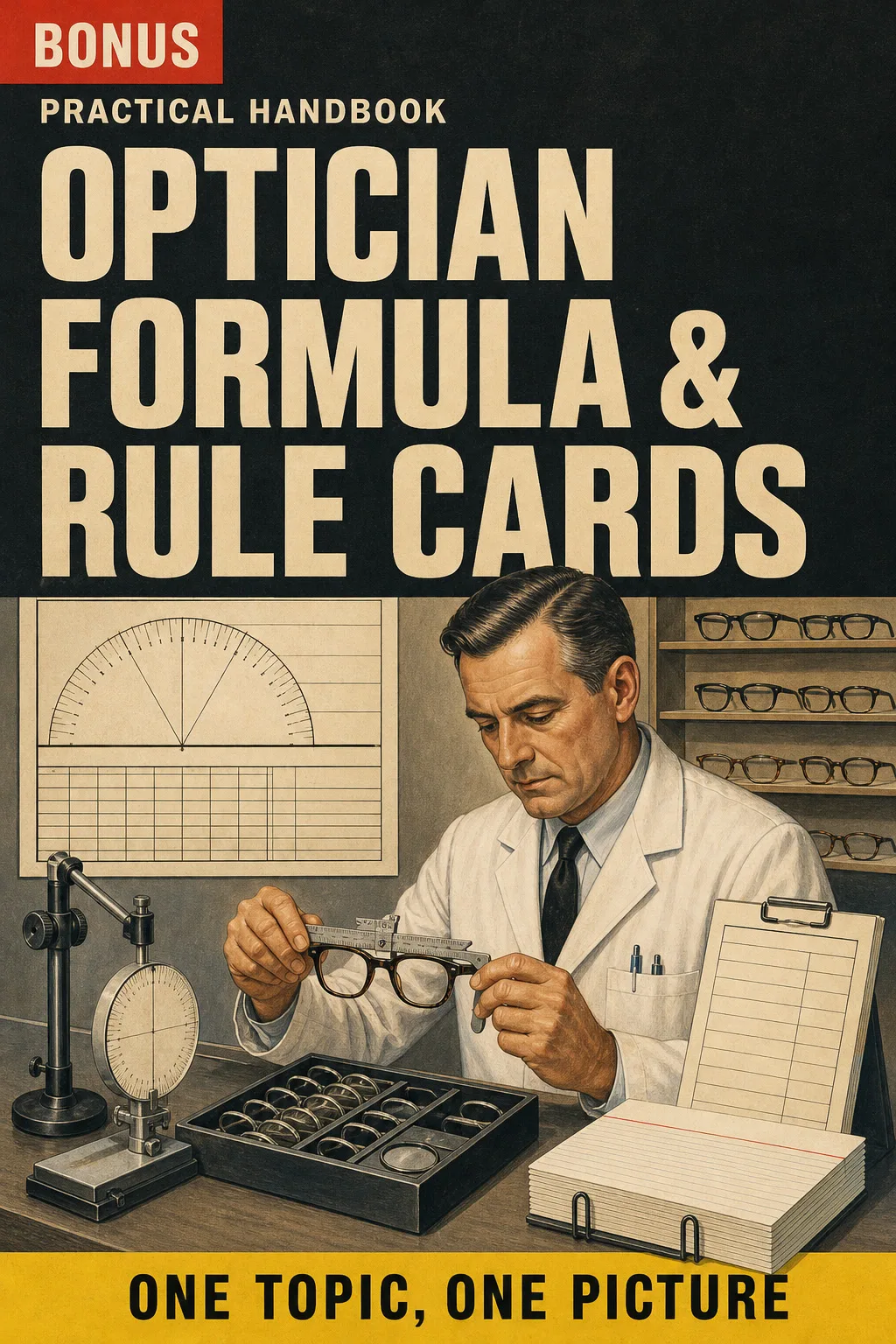
Optician Formula & Rule Cards

BONUS 2: «Optician Formula & Rule Cards»

Value on its own: US$ 14.90

Diopters, focal length, Prentice's rule, transposition and decentration on printable cards you can review at a glance on a break at the store.

Opticianry Exam Illustrated with 2 Free Books

  • Opticianry Exam Illustrated: 67 illustrated pagesUS$ 87
  • BONUS 1: Opticianry Practice Questions: Exam-Style Q&A by DomainUS$ 17.90
  • BONUS 2: Optician Formula & Rule CardsUS$ 14.90
  • High-resolution PDF to printIncluded
Total value US$ 119.80
YOUR PRICE:
US$ 37
You save US$ 82.80
YES, I WANT OPTICIANRY EXAM ILLUSTRATED FOR US$ 37

📄 This is a digital PDF book sent to your email: nothing is printed or shipped.

Secure purchaseEncrypted payment30-day guarantee

PDF by email: We email you Opticianry Exam Illustrated as a PDF, together with the two free books. It's a single payment: no installments, no extra charges.

Who This Book Is For

You're studying for the opticianry exam

You're studying for the opticianry exam

Each domain of the exam turns into drawn pages in the same order, so the optics and the Rx math finally connect.

Your exam date is close

Your exam date is close

All the formulas on one page, the most frequent mistakes and the last two weeks laid out, to review at a glance.

You already work in an optical shop

You already work in an optical shop

Transposition, PD, seg height and the lensometer drawn step by step, printed and kept at the counter.

Everything You Get Today

US$ 119.80US$ 37
YES, I WANT OPTICIANRY EXAM ILLUSTRATED FOR US$ 37

📄 This is a digital PDF book sent to your email: nothing is printed or shipped.

30DAYS
GUARANTEE

30-Day Guarantee

Try Opticianry Exam Illustrated for 30 days, bonus books included.

We refund everything if the file won't open, if the book isn't what you see here, if you were charged twice or if the email doesn't arrive. Just email us.

You pay once. No subscriptions.

Frequently Asked Questions

Is it for me if I already work in an optical shop but the math scares me?

Yes. Every formula comes with a drawing and a worked example, and transposition is 3 fixed steps. It starts from the basics but goes all the way to Prentice with cylinder and vertex distance.

Where does the content come from?

It follows the current candidate handbook for the national opticianry competency exam, with the current ANSI Z80.1 standard, the FDA impact-resistance rule and the FTC Eyeglass Rule as reference, in our own words and drawings. The handbook tells you which topics are tested; flashcards give you the terms. This book draws how each one works, with a worked example on the page.

Is it official material?

No. It's an independent study book, not affiliated with or endorsed by any exam board, standards body or state board. It's built for the national spectacle dispensing exam, and part 1 maps licensing state by state. It doesn't cover contact lens fitting in depth, and it doesn't give a certificate or CE credits. Rules vary by state: always confirm with your state board.

Does it replace my course or training?

No. It's study material that supports your training and supervised practice. It doesn't replace them, and it doesn't replace the judgment of an optometrist or ophthalmologist.

Are the practice questions the ones on the exam?

No. They're exam-style questions written for this book, grouped by domain, with the answer and a one-line why. They aren't real exam questions.

When and how do I get it?

The book and the 2 bonus books arrive as PDFs by email, at the address you enter when you pay.

Do I have to pay every month?

No. It's a one-time payment. No subscription.

Can I have it on paper?

Yes. The PDFs are printable, so you can print the whole book or just the pages you want at the counter.

How do refunds work?

You have 30 days. We refund everything if the file won't open, if the book isn't what you see on this page, if you were charged twice or if the email doesn't arrive: just email us.

Before You Close This Page

No more rereading with nothing sticking.

Transposition, Prentice and PD: you see them drawn and you're set.

You walk into the exam knowing where everything is.

Drawings make studying faster.

The book is right below.

One-time payment: US$ 37 · Guarantee: 30 days · PDF by email

YES, I WANT OPTICIANRY EXAM ILLUSTRATED FOR US$ 37

📄 This is a digital PDF book sent to your email: nothing is printed or shipped.